What Patagonia Taught Me About the Industry I'd Spent My Career In
Pinewood Surf Club 2021-2024
What Happens After
I started my first experiential agency in Los Angeles in 2016. Year one was slow enough that I spent a lot of time pretending to be busy. Years two and three were the opposite. We were growing fast, hiring, winning pitches, working with brands I'd wanted to work with for a decade. By any reasonable measure, the thing was working.
I was also miserable.
Not the kind of miserable you can point at. I had a great team. I had clients I liked. I had the kind of revenue that's supposed to fill that huge hole we all walk around with and pretend isn't there. And yet most weeks I'd land back in LA from a project, drop my bag in the hallway, and feel something closer to grief than relief. We'd just spent months and millions putting up something extraordinary, and in seventy-two hours it would be in a dumpster. The brand would walk away with a deck of photos and a recap video. The people who came would have a nice memory and no reason to come back, and we'd start over on Monday with a new pitch, a new deadline, a new four-day window to disappear into.
I told myself this was just what the job was. The waste, the churn, the lack of follow-through, the way every project ended like a one-night stand that everyone agreed not to talk about. I told myself I was tired because the company was growing, not because the work itself had a hole in it.
By 2019, I'd gotten engaged, the business was on a clear path to scale, and I wanted out. Or I wanted there to be another way. I wasn't sure which, and I wasn't ready to say either out loud.
We were married in November of 2019, and we went to Patagonia for our honeymoon.
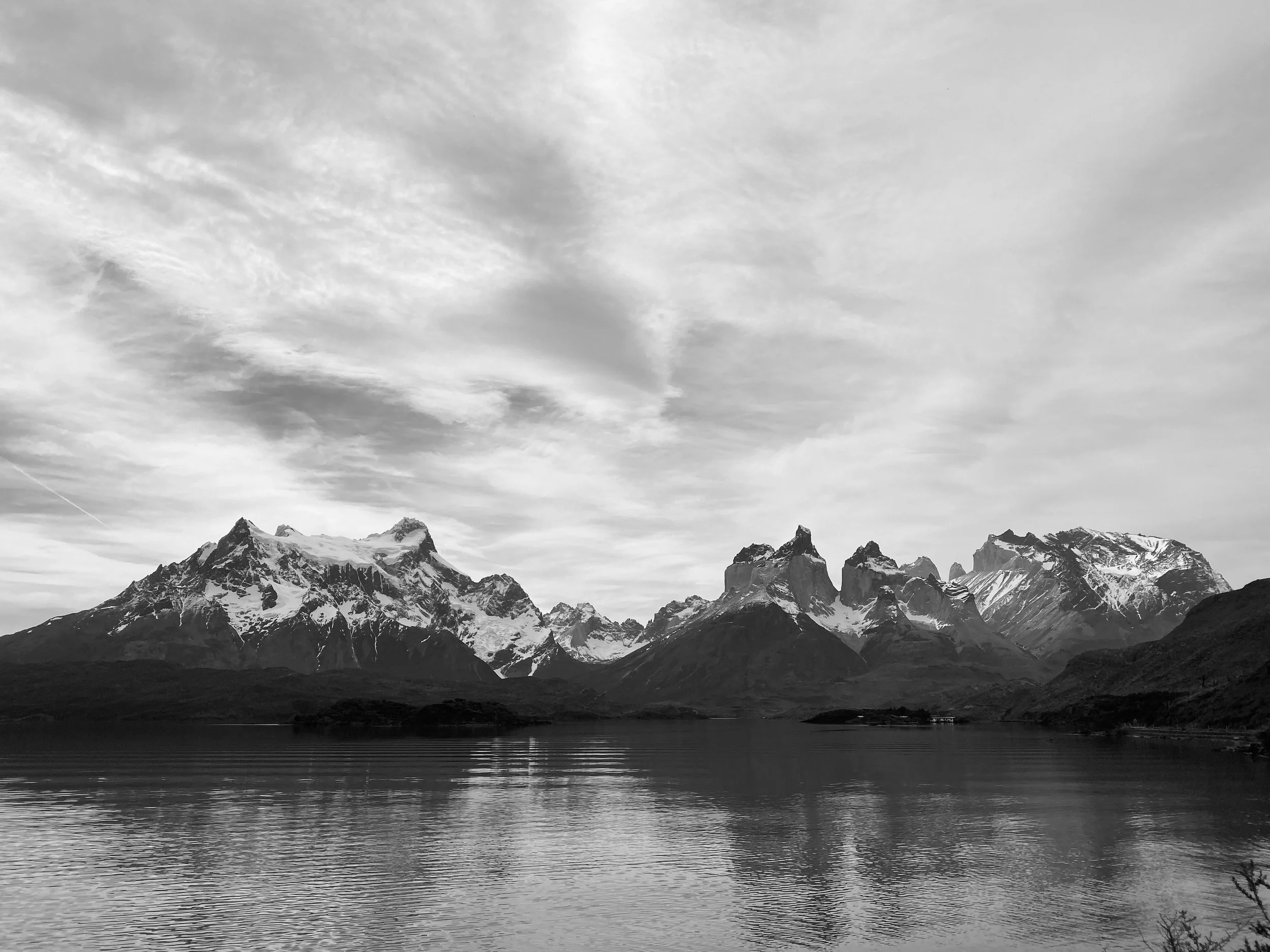
We drove from Puerto Natales toward Torres del Paine and the landscape kept escalating. Glacial lakes. Mountains that don't look real until you're standing in front of them. Snow against rock against a sky that felt closer than it should. I kept thinking the view had peaked. It just kept getting better.
The hotel we'd booked sat at the edge of the park. It wasn't Aman, but it wasn't trying to be. The materials were natural wood and stone, the rooms were quiet, the back of the building was almost entirely glass. There were no televisions. The food, the drinks, the guides, all of it was included. You went on excursions with whoever else was staying that week, which meant by day two you knew everyone's name, and by day four you were a little sad to leave.
What stuck with me wasn't the luxury. It was the restraint.
The hotel had figured out that Torres del Paine was the experience. Their job was to host it. They'd built every detail — the glass walls, the absence of screens, the shared excursions — around getting out of the way of something already extraordinary. They weren't competing with the mountains. They were framing them. And while they were at it, they were quietly hosting us to each other. Strangers became a temporary community without anyone announcing that's what was happening. By the end of the week, we were trading numbers with a couple from Minneapolis and making vague plans to meet up the next time we were all in the same city. Nobody had handed us a lanyard or scheduled a mixer. The place did the work.
I left Patagonia knowing I wanted to build something like that. I just didn't know yet that the lesson would take almost seven years to land. Or that I'd have to almost break myself trying to learn it.
By 2021, COVID had pushed most of experiential into digital, which I had no interest in chasing. I'd just wrapped a final project for Hyatt, I was exhausted, and I was sitting in Nashville, the city we'd moved to during the pandemic, still thinking about that hotel.
So I went looking for land. As you do, when you've never developed real estate in your life and have no business doing so.
We found 800 acres outside the city. Over a mile of river frontage, old-growth forest, creeks, swimming holes, the kind of land that does most of the work for you if you let it. The plan was a residential community anchored by a man-made surf wave, with equestrian, golf, fly fishing, and somewhere north of 300 homes. I planted a flag and started assembling a team.
This is where I met my real teachers. A weekend at Serenbe with Steve Nygren, learning how he'd built a community where leaving was harder than staying. Jan Gehl on how streets either invite you to linger or push you through. Blue Zones on why people in certain places live longer, and how almost none of it is about the food. Johan Perslow, a Swedish civil engineer who saw the land the way I was starting to see it, and who master-planned the property with me so that every path, every sightline, every placement of water pulled you toward your neighbors instead of away from them.
For nearly four years, I lived inside that project. I learned more about how places actually work on people than I had in over a decade of building experiences.
Then it didn't get built.
I won't litigate the why. What I'll say is that four years is long enough for a project to stop being a project and start being the shape of your life. It was the first thing I thought about when I woke up. It was the reason I'd moved. It was the answer I gave at dinners when people asked what I was working on. When it came apart, it didn't come apart cleanly. It came apart in the slow way that's worse, where you keep trying to save it longer than you should, and by the time you stop trying there isn't much left of you either.
The only choice you have, after something like that, is what you carry out of the wreckage.
What I carried out is this.
I had spent four years trying to design a place that would do for its residents what Torres del Paine had done for me. And somewhere in the middle of that, I realized I had been trying to solve the wrong problem the whole time. The thing that had broken me about experiential wasn't the long hours or the budgets or the politics. It was that we'd all agreed, quietly and collectively, to measure the wrong thing.
We were optimizing for the four days. The hotel in Patagonia was optimizing for what you'd remember twenty years later. Serenbe was optimizing for what your kids would inherit. Pinewood was supposed to be optimizing for what your grandkids couldn't imagine leaving.
Those are very different jobs.
The experiential industry has been doing the four-day version of the work for so long that most of us forgot there was another version. Brands spend enormous sums to be present in someone's life for a weekend, and then they vanish. The activation ends, the team flies home, the photos go in the case study deck, and the people who showed up, who actually gave you their attention, are left with nothing to do on Monday. No reason to come back. No one to come back to.
We've been treating brand experiences like the end of the campaign when they were always supposed to be the start of something a brand sticks around for.
The best brands, like the best hotels, understand they aren't the experience. The community is. The programming is. The thing the person came for is. Their job is to frame it, hold it, host the people who showed up to each other, and get out of the way of all of it. When a brand does that, something quieter happens. People come back without being asked, and they bring people with them. Nobody has to chase anyone down.
The right question isn't how many people showed up. It's how many are still around in a year, and whether they brought a friend.
I haven't said any of this out loud for a long time. Partly because I wasn't sure I'd earned it. Partly because the industry rewards the opposite: the bigger spectacle, the louder activation, the more impressive build. Partly because saying it out loud meant I'd have to actually build my company around it instead of just believing it privately.
I'm saying it now because four years inside a project that didn't get built taught me something I couldn't have learned any other way. When you spend that long trying to design a place where people belong, you stop seeing activations as events and start seeing them as the start of a long conversation the brand is willing to be in. You learn what makes people stay. You learn what makes them come back without being asked. You learn what a brand has to do, and stop doing, for a community to actually form around it.
I came out of it with four principles. A way of looking at this work that I'm done keeping to myself. The next thing I build, I'm building around them.
The four-day model is exhausted. Brands know it. The people who keep showing up to activations know it. The agencies grinding out the next bigger version of the last one know it.
What comes next is quieter. It asks a different question at the start, which is the only question that ever really mattered.
What happens after?