The Pinterest-Nike Inversion
A digital platform is up 18%. A physical brand is in turnaround. The bet that explains the gap.
By Matt Ford · May 2026 · 8-minute read
Two earnings reports landed in the same news cycle this spring, and they read like they were written for each other.
On May 4th, Pinterest reported Q1 2026 revenue of $1.08 billion, up 18% year over year, alongside 631 million monthly active users, up 11%. It was the platform's tenth consecutive quarter of double-digit user growth. The stock surged 15% on the report. Activist investor Elliott Management put $1 billion in to fund a $3.5 billion share buyback. The narrative wasn't subtle: Pinterest is a digital platform that has spent the last year actively encouraging users to spend less time on screens, and it's working.
A month earlier, on March 31st, Nike reported Q3 FY26 revenue of $11.3 billion — flat reported, down 3% currency-neutral. Net income fell 35%. The stock crashed 15% on the print. Goldman, JPMorgan, and Bank of America downgraded the company. Nike is guiding the current quarter down 2-4%, with China expected to fall 20%. Elliott Hill, who returned to the company in October 2024 to lead the turnaround, has been candid that the timeline keeps slipping.
A digital platform is winning by getting its audience off screens. A physical brand is losing after betting that screens were the future. The inversion is the story.
Pinterest's bet
Pinterest's "How Did They Do It?" campaign launched in early 2026 as the most ambitious paid media program in the company's history, spanning TV, CTV, OOH, digital, social, and cinema in the US and UK. The taglines: "It's about life, not likes." And: "Less URL. More IRL." A digital platform whose monetization depends on engagement built its biggest brand campaign around the message that the best outcome of being on Pinterest is leaving Pinterest.
The campaign reflects a deeper strategic decision. Pinterest has organized its entire brand position around the IRL premise, and it shows up in the experiential program too.
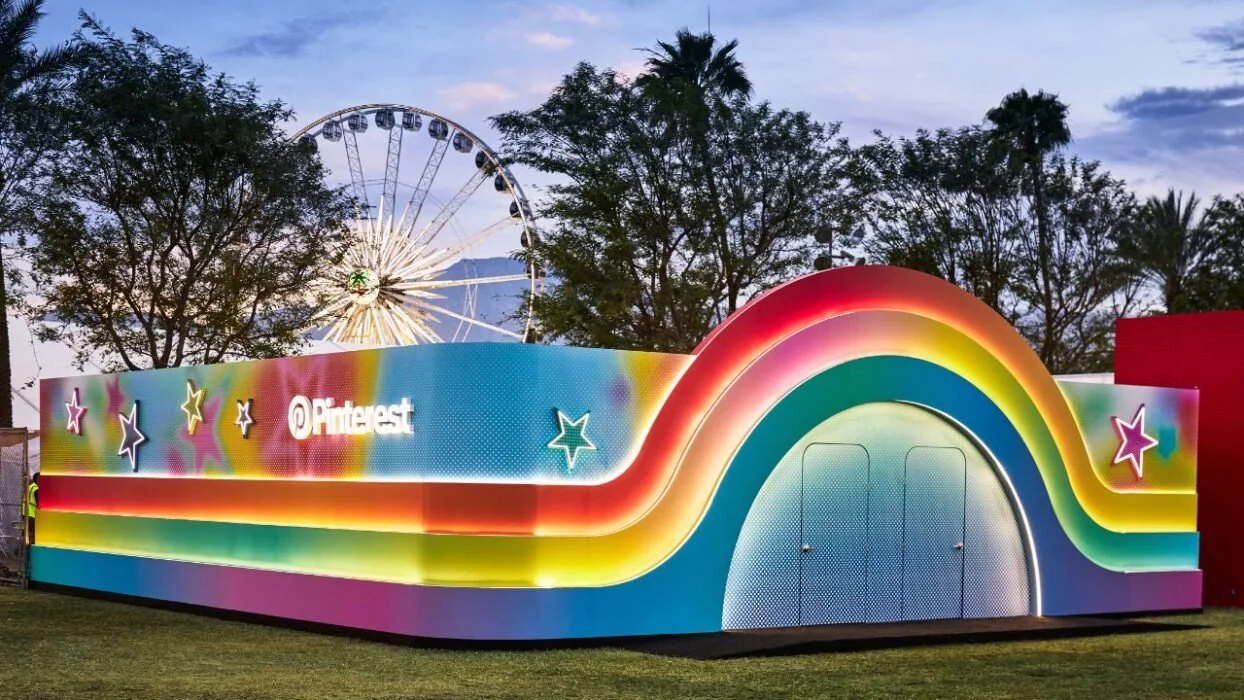
At Coachella 2026, Pinterest ran what they called the festival's first phone-free activation. Attendees locked their phones in Yondr pouches at the door and stepped into a curated space designed for analog hobbies — making custom charms with friends, writing personalized postcards to mail home, getting beauty touch-ups inspired by Pinterest trends. "This year, we're inviting festival-goers to stop scrolling past their lives and start living them," Sara Pollack, Pinterest's Global Head of Consumer Marketing, said in the company's announcement. "By creating a phone-free experience, we're making it easier to be truly present with friends, embrace the moment, and bring inspiration to life."
At Cannes Lions 2026, Pinterest's Manifestival is back for its second year — a hands-on experiential program organized around Pinterest Predicts trends, including a returning Pinterest Tattoo Parlour and a curated set of analog craft experiences. In cinema, Pinterest secured an exclusive "Silence Your Phones" courtesy message position at major film premieres. The thread across all of it is consistent: physical, embodied, present.
The numbers say it's working. Gen Z is now 42% of Pinterest's user base and the fastest-growing demographic the company has. The platform asks users to leave, and they're leaving and coming back more often than ever.
Nike's bet
Nike's recent decade is the story of the opposite bet. Under former CEO John Donahoe, who took over in early 2020, Nike pulled back hard from its wholesale partners — Foot Locker, regional sneaker stores, mid-market athletic chains — and bet on direct-to-consumer apps and digital channels. The company more than doubled its allocation to digital channels by 2025. The DTC apps were the future. The wholesale shelf space Nike vacated would be rebuilt later, on Nike's terms, through Nike's own channels.
The shelf space wasn't vacant for long. New Balance grew 19% in 2025 to $9.2 billion in global revenue, up 180% since 2020. Hoka and On took most of the running category. Brooks, Adidas, and Asics filled in the rest. Nike's US market share fell to 22.9% in 2025, down nearly three points year over year, the third consecutive year of decline. The shelves came back. They just weren't full of Nike anymore.
The DTC bet didn't compensate. App downloads grew, but the stickiness wasn't there at the level the company needed. The promotional cycle deepened. The innovation pipeline thinned. Cultural relevance with Gen Z eroded — the conversation around running and lifestyle moved to On, to Hoka, to New Balance's collaboration-heavy program, to Salomon's gorpcore moment. Nike kept making product. The audience kept finding it less interesting.
The diagnosis isn't that Nike abandoned community. They didn't. The Made to Play youth program is still running. Nike Run Clubs still exist. Athlete partnerships continue. What changed is the position of physical and community work inside the strategy. Under the digital-first bet, those programs became line items inside a brand whose primary customer relationship was now mediated through screens. The shelves, the running clubs, the local sneaker stores, the cultural touchpoints that had built Nike's brand over fifty years kept existing. They stopped being the upstream input. They became downstream of digital, and they got squeezed.
The position is what made the difference.
The structural read
Pinterest treated IRL as the strategy, with everything else organized around it. The campaign serves the IRL premise. The product roadmap serves the IRL premise. The platform itself is positioned to drive users toward IRL action. That orientation makes every other channel — the app, the social posts, the OOH, the cinema buys — coherent. They're all telling the same story, and the story is go outside.
Nike treated digital as the strategy, with the physical world as supporting infrastructure. The apps were upstream. The shelves were downstream. The grassroots community work was a nice-to-have. When the digital channels couldn't carry the load — because audience attention was fragmenting, because trust in digital media was collapsing under the weight of AI-generated content, because Gen Z was actively pushing back against being terminally online — the supporting infrastructure couldn't pick up the slack. It had been organized to support digital, not the other way around.
The lesson here is positional. The bet that matters is which channel sits at the top of the strategy, and which channels are organized around it. Pinterest put physical at the top; their digital business is benefiting. Nike put digital at the top; their physical business is suffering, and the digital business that was supposed to compensate is also softer than projected.
What this means for marketers right now
A few patterns are converging in a way that makes the Pinterest-Nike comparison legible beyond the two companies. Consumer trust in digital media has fallen sharply over the last 18 months, driven primarily by the spread of AI-generated content. Gen Z is both the most digitally native demographic and the most fatigued by it — 81% of Gen Z respondents in a recent Harris Poll said they wished they could disconnect more from devices, even as they remain heavy social platform users. Industry research from Freeman shows that 80% of consumers consider in-person events the most trusted way to discover new products and services. Customer acquisition costs in digital channels have risen approximately 60% over five years, per the Duke Fuqua CMO Survey, while loyalty and repeat-purchase economics continue to favor channels that build durable affinity over time.
The brands that read those signals correctly are reorganizing. Netflix opened Netflix House in Philadelphia in November 2025 and Dallas in December, with Las Vegas planned for 2027 — explicitly framed by company leadership as a subscriber retention engine, not a marketing campaign. Hershey's Chocolate World, Tillamook Creamery, Lululemon's Lincoln Park flagship, Sam's Club's experiential network, Mastercard's "experiences money can't buy" — the pattern is the same. Persistent physical platforms that produce content, build community, and feed the rest of the marketing system from a position upstream.
Pinterest is the cleanest case study of what that looks like at platform scale. Nike is the case study of what happens when the bet runs the other way.
The working thesis
I've been writing about this on and off for the better part of a year, in a framework I call Designed Inevitability. The core argument is that experiential — broadly defined to include physical platforms, IRL community, and place-based programs — is most valuable when it's the upstream input the rest of the marketing system draws from, rather than a parallel channel competing with digital and social for budget. The Pinterest-Nike inversion is a real-time demonstration of why.
Pinterest is winning because they treated physical presence as the source of everything else they make. Nike is losing because they treated physical presence as something downstream of the apps they wanted to build. Same word — presence — different position in the strategy. Different outcomes.
For CMOs reading this in the spring of 2026, the question isn't whether to invest more in IRL. The question is whether you've structured IRL as a campaign you run alongside the others, or as the platform the others draw from. There's a real gap between those two positions, and the market is starting to make it visible in the financials.
The brands that figure out which side of the gap they're on this year are the ones whose 2027 numbers will look more like Pinterest's than Nike's.
Sources used in this piece: